


The Female Form in Ancient American Art

Created:
Author: jeremy

Among collectors of ancient American art, representations of the female form are prized for their sculptural beauty, cultural significance, and remarkable craftsmanship. From the expressive ceramic figures of West Mexico to the refined portrayals of Maya and Andean cultures, these works embody themes of fertility, ancestry, status, and ritual. Their timeless forms have inspired collectors and modern artists alike, offering a tangible connection to the beliefs and artistic traditions of the ancient Americas. Today, exceptional examples remain highly sought after for both their aesthetic power and their ability to illuminate the rich diversity of pre-Columbian civilizations.

The works on display here are exclusively on offer from Mark Blackburn. He is one of the foremost private dealers and collectors of tribal and indigenous art in the world, the author of 8 books, a Senior Certified Appraiser, and the assembler of what has been called the finest private collection of Polynesian art ever put together.
1 of 3
Mark Blackburn Art
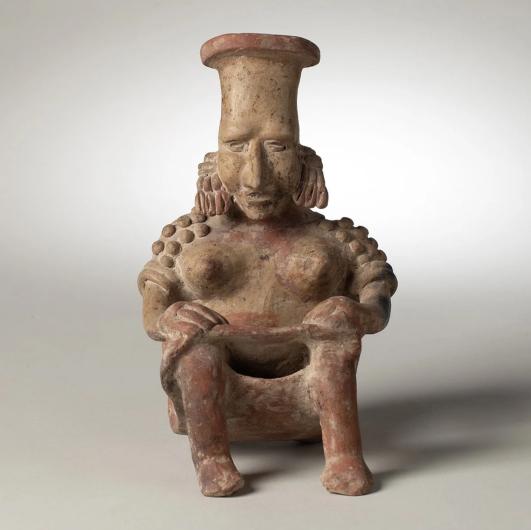
Jalisco Seated Female Figure with Beaded Shoulders

The figure is seated with knees drawn up and hands resting on the legs, a cylindrical, flared vessel spout rising from the top of the head. Long curling locks of hair fall along either side of the face, which shows almond shaped eyes, a straight nose, and a closed mouth. Rows of small round beaded nodules cross the shoulders and upper arms on both sides. The chest displays modeled breasts with traces of red pigment, and the lower body is finished in a reddish orange slip that contrasts with the plain cream tone of the torso and head. Scattered surface deposits are visible across the piece, consistent with age.


Jalisco, Mexico
Circa 600 to 900 AD, Ceramic, Height 11 inches
Provenance: Konstantinos Dino Christou, Baltimore, Maryland; Private collection, New York; Harmer Rooke Galleries, New York, 1970s

2 of 3
Mark Blackburn Art
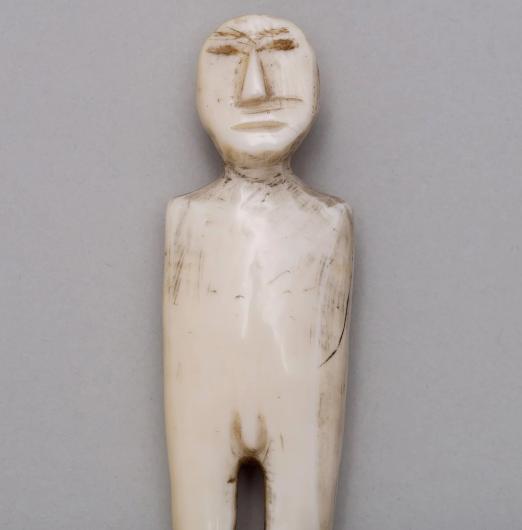
Thule Culture Walrus Ivory Female Amulet Figure

Female figures of this type served multiple ceremonial functions in Inuit life, standing in for community members absent during ceremonies, averting infertility, or attracting the attention of the animal spirit (inua) during the doll festival. The Thule culture, ancestral to contemporary Inuit peoples across the Arctic, produced a sustained tradition of small carved ivory figures that encoded spiritual agency in portable and durable form. Female amulet figures represent some of the most personally significant objects in this tradition, carried and used across the course of a lifetime.

Thule culture, Alaska
19th century, Walrus ivory, Height 3 1/2" (8.9 cm)
Provenance: Le Veel, Paris, September 1960; Peter and Vera Schnell, Zurich, Switzerland

3 of 3
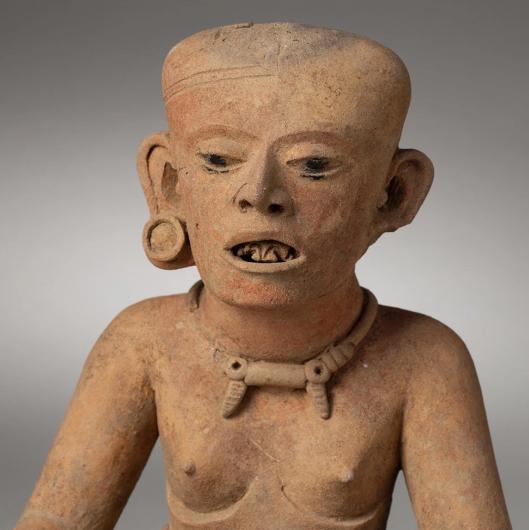
Remojadas Veracruz Seated Female Figure

The Remojadas culture of central Veracruz produced a distinctive ceramic tradition during the Early Classic period, characterized by hollow figures modeled with expressive facial features, articulated limbs, and surfaces decorated with chapopote, a natural asphalt applied as black paint to create strong tonal contrasts. Seated female figures of this type are among the most formally considered productions of the Remojadas tradition, their posture and modeling reflecting a concern with the representation of the human form that distinguishes Veracruz ceramic production from the more schematic figural traditions of contemporaneous cultures. The subject is connected to fertility, ancestor veneration, and the ritual life of the Gulf Coast communities that produced them.

Remojadas, Veracruz, Mexico
Early Classic period, AD 300 to 600, Ceramic, Height 10 3/4" (27.3 cm); length 8" (20.3 cm); width 5" (12.7 cm)
Provenance: Peter Wray, Scottsdale, Arizona, acquired 1970, collection no. 71; David Bramhall, New York City; Brian Mahony, Redding, Connecticut, acquired February 19, 1986, purchased for $24,000

Art and Object Marketplace - A Curated Art Marketplace